
Maker Station equipment
Ultrasonic
welder
A NUCLEUS Rotosonic DX1 seam-making machine for suitable thermoplastic textiles and films. It is operated much like a sewing machine, but a vibrating roller bonds the layers instead of a needle and thread.
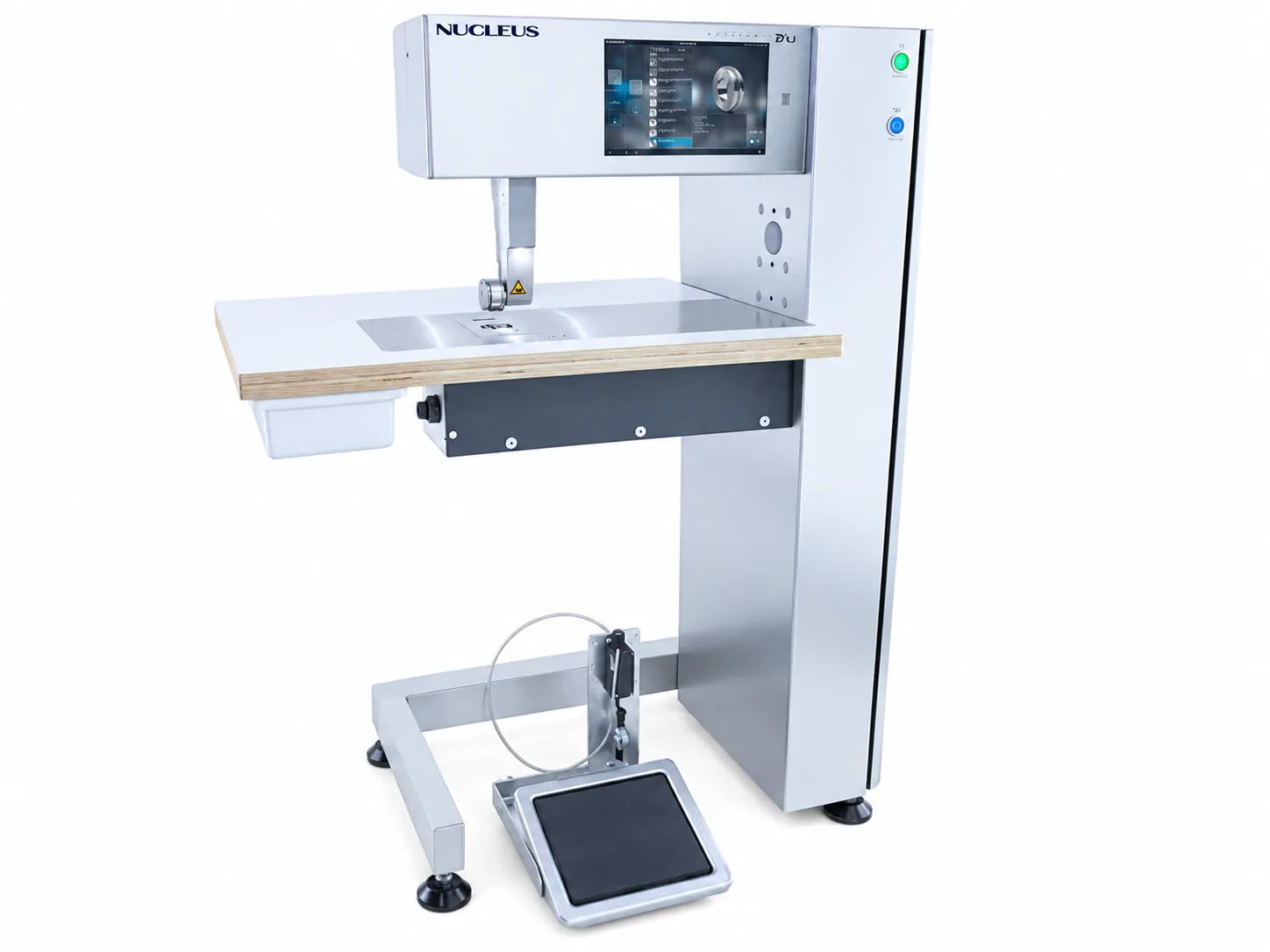
Using the ultrasonic welder
The ultrasonic welder is available by arrangement. We are not running scheduled workshops for it yet.
Contact Maker Station with the materials, number of layers and type of seam you want to test. Staff will help confirm whether the material and wheel are appropriate.
How it works
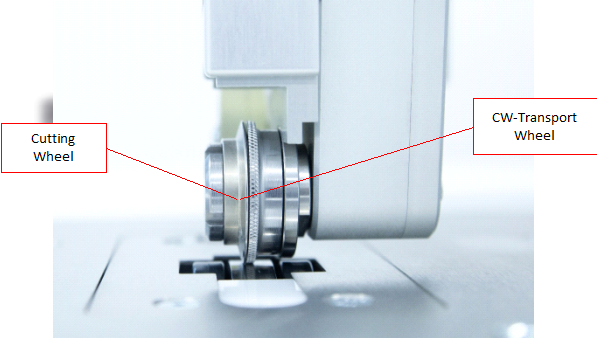
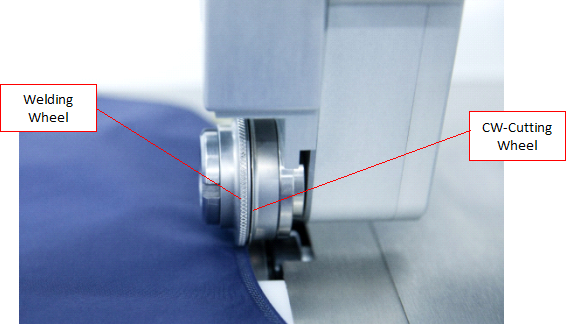
Think of the machine as a specialised sewing machine. The upper patterned wheel takes the place of the needle, and the lower wheel supports and feeds the material. As the material passes between them, pressure and ultrasonic vibration generate heat at the contact points and fuse compatible thermoplastics.
The wheel pattern determines the visible seam and contact area. It can join, seal, emboss or cut depending on the approved wheel and material combination.
Set up and make a test seam
- Identify the material. Confirm the fibre composition, coating and layer construction. The material needs enough compatible thermoplastic at the seam interface to melt and reform.
- Select a wheel. Ask staff to fit the wheel that suits the intended seam. Do not change wheels yourself.
- Align the layers. Place clean, flat offcuts between the rollers as you would position fabric under a sewing-machine presser foot.
- Start with the station setup. Leave the feed speed at its default. Staff will set initial pressure and power for the material.
- Make a short test seam. Keep fingers clear, guide rather than pull the material, and stop if it gathers, stretches, melts excessively or leaves the wheel path.
- Inspect the result. Let the seam cool, then check it by peeling and pulling in the direction it will be loaded.
- Adjust one control at a time. Change pressure or power in small steps with staff, then repeat the test.
- Record the successful setup. Note the material and coating, number and orientation of layers, wheel, pressure and power so the test can be repeated.
Pressure versus power
| Control | What it changes | Too little | Too much |
|---|---|---|---|
| Pressure | How firmly the rollers hold the layers together | Intermittent contact, gaps or a seam that peels apart | Wheel marks, distortion, stretching or restricted feeding |
| Power | How much ultrasonic energy becomes heat at the seam | Little fusion and a weak seam | Glazing, thinning, cutting, holes or melted edges |
Fashion materials
A quoted synthetic percentage is only a screening guide. Fibre blend, weave or knit, coating, finish, thickness, number of layers and which surfaces touch each other all affect the weld. Always use labelled offcuts and make a supervised test seam before working on a garment or final piece.
| Material | Likely suitability | What to check |
|---|---|---|
| Polyester / PET | Often suitable | Test woven, knitted, nonwoven, ribbon and film constructions separately. Dense finishes can change the result. |
| Nylon / polyamide | Often suitable | Thin fabrics can mark, distort or cut before a strong seam forms. |
| Polypropylene or polyethylene | Often suitable | Common in nonwovens and films. Confirm both seam faces are compatible. |
| TPU film or TPU-coated textile | Potentially suitable | The TPU layers normally need to face each other at the seam. Confirm the backing fabric and coating specification. |
| Elastane / spandex / Lycra blends | Depends on the complete blend | Elastane content alone does not make a fabric weldable. Check the majority fibre, stretch, recovery and seam distortion. |
| Coated, laminated or finished fabrics | Test required | Identify every layer and finish. A coating may weld even when the base fabric does not, or may block fusion between compatible fibres. |
| Cotton, linen, wool or silk alone | Not suitable | Natural fibres do not thermoplastically fuse. A separate compatible film or coating would need evaluation. |
| PVC / vinyl | Do not test without approval | Requires explicit staff approval and a material-specific risk assessment before it enters the process. |
Safety
- Keep fingers, jewellery, hair and loose clothing clear of the rollers.
- Guide the textile from a safe distance. Do not reach between the rollers or pull material against the feed.
- Stop immediately if material catches, bunches, smokes or gives off an unexpected odour.
- Do not weld unidentified materials or change wheels, guards, covers or internal settings.
- Switch off and tell staff before clearing a jam or investigating a fault.
Frequently asked questions
Why does the seam peel apart?
Check that the contacting surfaces contain compatible thermoplastics. If they do, the seam may need slightly more pressure or power. Change one control at a time and make another short test.
Why is the material marked, cut or melted?
Pressure or power may be too high for the fabric, or the wheel may be inappropriate. Stop and ask staff to review the setup rather than changing feed speed.
Why does a synthetic-blend fabric still fail to weld?
The thermoplastic fibre may not be concentrated at the seam surface, or a finish, natural-fibre face or incompatible laminate may prevent fusion. A fibre percentage does not predict the construction of the seam.